


Schedule Appointment »
317-912-1000
317-912-1000
The Infinite Banking Concept (IBC) sounds almost too good to be true–a financial strategy that allows you to become your own banker, borrow money from yourself, and somehow continue earning interest on the money you’ve borrowed.
While some critics dismiss it as too good to be true, others praise it as a powerful wealth-building tool. As with most things in life, the truth about Infinite Banking lies somewhere in the middle. It’s not a scam, but it’s also not a miracle solution for everyone. Its success depends on proper implementation, a well-structured whole life insurance policy, and a clear understanding of how to leverage it effectively.
In simple terms, the Infinite Banking Concept (IBC) – aka Becoming Your Own Banker–is a method of using a specially-designed whole life insurance policy as your own personal bank. Instead of relying on traditional banks for loans and financing, you borrow against the cash value of your life insurance policy.
The concept was originated by Nelson Nash in his book “Becoming Your Own Banker” in the 1980s, but the underlying principles have been used by investors and entrepreneurs for over a century.
 |
Infinite Banking Made Simple Instant Download This free binder has the information to build your own Infinite Banking system. |
The end result is that you have access to a source of financing that you control, while your money continues working for you in two places at once – in your insurance policy and in whatever you used the loan for.
To make the concept more concrete, let’s look at a couple real-world examples of Infinite Banking being put to use:
In the 1880s, the owner of Fink’s Cigar Company used a loan from his whole life policy to finance the expansion of his business when banks weren’t willing to lend. This strategic move not only facilitated immediate expansion but also underscored the practical benefits of leveraging life insurance for business financing. The business thrived and is still family-owned and operated today.
More recently, the 46th U.S. President Joe Biden used loans from his whole life policies to help pay for his children’s college education, according to financial disclosures released by the White House in May of 2012. This decision highlights one of the main benefits of whole life insurance—giving access to cash without needing bank loans or credit approvals. While not a full-fledged Infinite Banking Plan, it demonstrates the usefulness of having access to policy loans.
So clearly there are situations where having a whole life policy to borrow against came in handy. But before you rush out to implement IBC yourself, there are some important caveats to be aware of.
A lot of the hype around Infinite Banking stems from misunderstandings or misrepresentations of how the concept actually works. Let’s break down some common issues:
While IBC isn’t a scam, per se, it is often marketed in an overly rosy or one-size-fits-all manner. To decide if it’s right for you, you really need to examine the pros and cons for your specific situation.
In today’s business world, transparency can be a rare commodity. Too often, critical details are withheld, leaving individuals without the full picture—an issue that, unfortunately, extends to some insurance agents as well.
However, this doesn’t mean that all agents operate with bad intentions. Financial literacy and due diligence are essential, but it’s equally important to recognize that many professionals are dedicated to providing honest, valuable guidance.
 |
Policy Checklist Make Sure You Get a Good Policy Is your policy good or bad? Use this checklist to help evaluate your existing life insurance or a new policy you are considering. |
At McFie Insurance, our mission is to empower individuals with knowledge. We believe in full transparency, sharing insights from both our successes and past lessons. By equipping you with the right information, we aim to help you make informed financial decisions with confidence.
When people ask, “Is Infinite Banking a scam?” they’re often only looking at one side of the equation. Like any financial strategy, Infinite Banking life insurance has its advantages and limitations, and it’s not the right fit for everyone.
However, dismissing it as a scam overlooks the legitimate benefits it can offer when used properly. Understanding both the pros and cons is key to determining whether it aligns with your financial goals.
Here’s an honest look at both the advantages and disadvantages of implementing an Infinite Banking strategy:
So is Infinite Banking a good wealth-building tool? It certainly can be, but it’s not a silver bullet. It works best as one component of a broader financial plan, not an all-in-one solution.
Infinite Banking life insurance tends to be best suited for a fairly specific group of people:
If you have the means to fund a policy and the discipline to treat it like your own personal bank, IBC can be a great way to build secure, accessible wealth. But if you’re living paycheck to paycheck or aren’t prepared to actively manage your finances, it’s likely not the right solution.
So, is Infinite Banking a scam or a legit strategy? The truth is, it’s a bit of both–or neither, depending on how it’s presented and implemented. At its core, Infinite Banking is a proven way to build and access wealth using whole life insurance. It’s been used successfully by individuals and businesses for over a century.
However, it’s not a get-rich-quick scheme, and it’s not right for everyone’s financial situation. Beware of anyone trying to paint IBC as a miracle money machine – real wealth is built slowly and requires discipline. The key is to work with an agent who takes the time to understand your goals and design a tailored plan.
Infinite Banking is a legitimate financial tool that can provide a lot of benefits if implemented properly in the right situation. But it’s not the only path to prosperity.
At McFie Insurance, we focus on helping clients build sustainable wealth using properly designed participating whole life insurance to keep more of the money they make, grow their wealth and have financial peace of mind.
We use many of the principles of the Infinite Banking Concept. Our clients use their policies to self-finance projects and John McFie of McFie Insurance has written a 31-page eBook on understanding the Infinite Banking Concept and how it works in our modern environment.
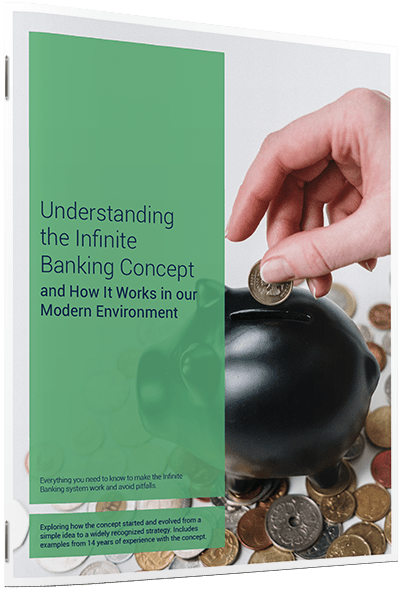 |
Understanding the Infinite Banking Concept and How It Works In Our Modern Environment 31-page eBook from McFie Insurance Order here> |
Owning participating whole life insurance will help most people keep more of the money they make, grow their wealth and have financial peace of mind.
We sell properly designed participating whole life insurance policies that work for the Infinite Banking Concept, help people keep more of the money they make, grow their wealth and have financial peace of mind. Give us a call at 702-660-7000 or schedule a strategy session we can help you with your infinite banking life insurance.
 Tomas P. McFie DC PhD
Tom McFie is the founder of McFie Insurance and co-host of the WealthTalks podcast which helps people keep more of the money they make, so they can have financial peace of mind. He has reviewed 1000s of whole life insurance policies and has practiced the Infinite Banking Concept for nearly 20 years, making him one of the foremost experts on achieving financial peace of mind. His latest book, A Biblical Guide to Personal Finance, can be purchased here.
This free binder has the information to build your own Infinite Banking system.