770 Accounts: Everything You Need to Know


KEY POINTS
  • 770 Account Overview: A 770 account is a cash value life insurance policy, regulated under IRS Tax Code section 7702. It applies to whole life and some universal policies but excludes term insurance.
  • 770 Account Types: These accounts come as whole life or universal life insurance. Whole life policies in a 770 account accumulate cash value, potentially more than paid premiums. Universal policies, although tax-free, have drawbacks like reduced cash values and benefits.
  • 770 vs. 401K Plans: 770 accounts, funded with after-tax dollars, enable tax-free growth and access to funds via policy loans or withdrawals, unlike 401Ks. They offer easier fund access and no credit score impact.
  • Keyman Policies in Business: Integrating keyman policies with a 770 account provides policy loans and a death benefit. Essential for business succession, they offer financial stability during transitions and can act as loan collateral.
  • Tax Benefits and Management: 770 accounts offer tax advantages, allowing tax-free loans against cash value. They provide financial flexibility but have some tax implications on excessive withdrawals. Properly managed, these accounts are effective for savings growth and family protection.

What is a 770 Account?

A 770 account is a cash value life insurance policy regulated under IRS Tax Code section 7702. This tax code restricts how quickly the cash value in the policy can grow without being subject to taxes. Life insurance policies designed to conform to section 7702 are commonly called 770 accounts or 7702 plans.

770 accounts are either whole life policies or some type of universal policy. Term insurance isn’t called a 770 account because term policies don’t have cash value.

Schedule Appointment »

When an insurance agent mentions a “770 account,” they are almost certainly referring to a life insurance policy that builds cash value the policy owner can borrow from without being subject to taxes.

The term “770 account” is often used to describe dividend-paying life insurance. Technically, any life insurance policy which complies with section 7702 qualifies as a 770 account.

Quick Start Guide Discover The Perpetual Wealth Code™, an easy system to maximize the control of your savings and minimize penalties so you can keep more of the money you make and build wealth every year WITHOUT riding the market roller-coaster. Download here>

How Does a 770 Account Work?

770 accounts can either be whole life insurance or some type of universal insurance. Each functions differently with unique advantages.

770 Account as Whole Life Insurance

A 770 account structured as a whole life policy builds cash value as premiums are paid. With a well-designed policy, the cash value grows over time to exceed the total amount paid in premiums. The policy owner can borrow the cash value at any time without paying taxes on the growth.

If the 770 account is with a mutual insurance company, it’s called a participating policy and is eligible to receive dividends. While dividends aren’t guaranteed, they allow policyholders to share in the company’s profits.

The cash value in whole life policies grows at a guaranteed rate of return set by the insurer, meaning growth isn’t tied to market performance. This provides stability and predictability in building wealth.

770 Account as Universal Life Insurance

A 770 account structured as a universal policy—whether plain universal, variable universal, or indexed universal—also experiences tax-free growth.

From an insurance standpoint, universal insurance is a poor product. While non-guaranteed values are projected optimistically, actual guaranteed values are disappointing.

A review of any universal policy usually reveals the guaranteed cash value and death benefit decreasing, with the policy potentially lapsing when the insured gets older unless the owner can pay a rapidly increasing premium.

Universal policies generate profit for insurance companies, but their design flaws make them unsuitable for most consumers, even when designed as a 770 account in compliance with Section 7702.

770 Accounts and Infinite Banking

The 770 account strategy is closely related to the infinite banking concept, a wealth-building approach that treats permanent life insurance as a personal line of credit.

What is Infinite Banking?

Infinite banking involves using permanent coverage, usually whole life insurance, as a personal banking system. The concept was introduced by insurance agent Nelson Nash in the 1980s and detailed in his 2000 book, “Becoming Your Own Banker: Unlock the Infinite Banking Concept.”

With this strategy, policyholders contribute extra money beyond their required premiums(around 10% of their income), to accelerate cash value growth. Once enough cash value accumulates, they borrow against the policy rather than relying on traditional lenders.

How 770 Accounts Enable Infinite Banking

Because 770 accounts are structured to comply with section 7702, they provide the tax advantages necessary for infinite banking to work effectively. The cash value grows tax-free, and loans against that value aren’t taxed, creating a tax-efficient personal banking system.

Important Considerations

While infinite banking offers advantages, it requires careful planning and monitoring. The strategy works best for those with discretionary income who can commit to long-term premium payments and disciplined loan management.

What is the Difference Between a 770 Account and a 401K?

401Ks and 770 accounts serve different purposes and operate under different tax structures. Understanding these differences helps you choose the right wealth-building strategy.

Tax Treatment

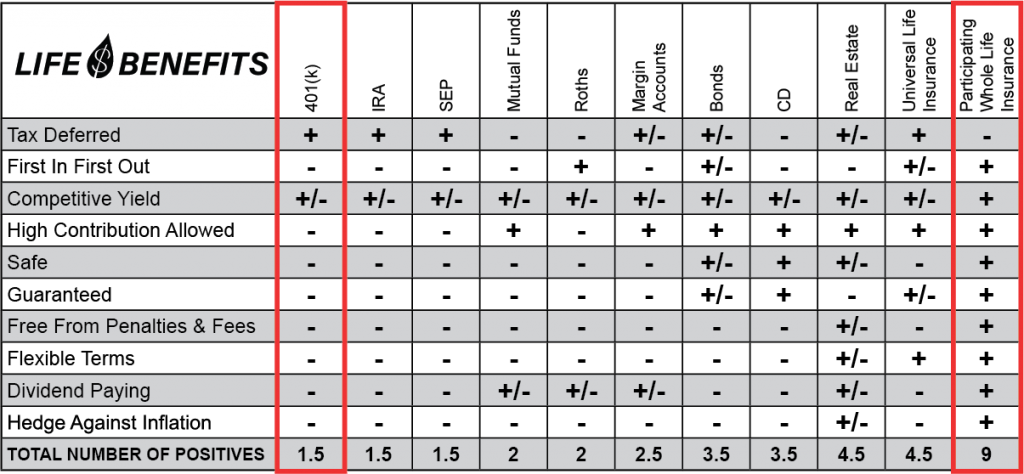
Money contributed to a 401k plan is tax-deferred. While this provides short-term tax relief, you’ll pay taxes when accessing the money later. As tax rates tend to rise over the years and deductions decrease as you approach retirement age, you may pay more in taxes by deferring them than by paying them immediately.

A 770 account is funded with after-tax dollars. This allows your cash value to grow tax-free and makes the death benefit tax-free as well.

Access to Funds

Accessing money within a 401k can be difficult and expensive. Some plans allow borrowing, but you must carefully repay the loan and interest according to the terms, or it could be considered a distribution. Some plans require full loan repayment if you leave your job.

You may also face a 10% penalty on loans or withdrawals unless you are age 59½ or meet a qualifying exception. After age 72, withdrawals from a 401k are mandatory.

With a well-designed 770 account, cash value easily grows to exceed the total amount ever paid in premium and is accessible to the policy owner through signature loans or withdrawals without credit checks, lengthy applications, or approval processes.

Understanding the Infinite Banking Concept pdf ebook Understanding the Infinite Banking Concept and How It Works In Our Modern Environment 31-page eBook from McFie Insurance Order here>

Market Exposure

401ks are tied to the market. While they can grow over the years, poor market performance or corrections can quickly wipe out much of the value. Starting over financially is never pleasant, especially when nearing or in retirement.

770 accounts are not dependent on the market like 401ks. Values are guaranteed by the insurance company and not subject to market volatility. This enables well-designed 770 accounts to grow steadily regardless of market performance.

770 Account vs 401(k) Two Paths to Retirement Wealth


Borrowing from a 770 Account

A 770 account allows you to borrow against your policy’s cash value with no taxes, credit checks, or usage restrictions. Loans are simple—no approval, paperwork, or penalties. 

Repayment Flexibility
Only the interest payment is required. You choose your repayment schedule, and there’s no set deadline. Unpaid loans are subtracted from the death benefit when the insured dies.

Impact on Policy Performance
Loans don’t affect your credit score. With non-direct recognition companies, loans don’t impact policy performance; with direct recognition companies, loans may reduce dividends.

Withdrawals
You can also withdraw cash value permanently. Withdrawals are tax-free up to the amount you’ve paid in premiums; amounts above that may be taxed. There are no age restrictions or penalties, but withdrawals permanently reduce cash value and the death benefit.

Keyperson Policies
A keyperson policy protects a business if a key employee or owner dies or becomes disabled. This 770 account provides both cash value access and a death benefit to help cover replacement costs and maintain stability. Split-dollar arrangements can let key employees share in the benefits.

Business Succession Planning
A 770 account supports business continuity by providing cash value during ownership transitions and death benefits to stabilize operations. It can also serve as collateral for loans and fund keyperson coverage to replace critical personnel.

Tax Benefits
Cash value growth in a 770 account is tax-deferred. Loans against the policy are tax-free, and life insurance death benefits are generally not taxable, offering strong advantages for estate and financial planning.

*With a direct recognition insurance company, outstanding policy loans will affect the policy dividend. Read more about this here. 

Withdrawing Money from a 770 Account

Policy owners can permanently withdraw cash value from the policy. Withdrawals will be received tax free up to the cost basis (total amount paid in premium). With a well-designed policy, cash value will grow to become greater than what you have ever paid in premiums, withdrawals taken above cost basis may be subject to taxes.

3 Things You Can Do To Become Wealthier57-page slide deck Many people are losing money with typical financial planning. Even people who were "set for life" are running out of money in retirement. Here's an easy guide with 3 things you can do to become wealthier.
Download here>

770 accounts are not dependent on the market like a 401k. 770 account values are guaranteed by the insurance company and are not subject to the whims of the market. This enables well-designed 770 accounts to grow steadily whether the market performs well or not.

What are Keyman Policies?

A keyman policy, also known as key person insurance, safeguards a company financially if a crucial employee or stakeholder, like a CEO or CFO, becomes incapacitated or passes away. It offsets costs related to replacing such critical personnel.

When combined with a 770 Account, a keyman policy offers dual benefits. This setup not only provides policy loans from the cash value but also ensures a death benefit for the employer. This benefit is crucial for covering replacement costs during transitions, ensuring organizational stability.

Moreover, a split-dollar arrangement can be applied to key stakeholders. In this, both employer and employee share premium payments and benefits, giving the key employee access to the 770 Account’s advantages, strengthening their financial security.

Can a 770 Account Help in Business Succession Planning?

A 770 Account is vital in business succession planning due to its financial support during transitions. It offers cash value to sustain business operations during the owner’s life, ensuring stability. After the owner’s death, its death benefit helps cover expenses and maintain operations while new leadership is established. The account’s policy loans provide flexible financial support during transitions.

Additionally, a 770 Account can be collateral for bank loans, enhancing loan eligibility for business growth or unforeseen financial needs. Keyman policies for employees and partners, part of the 770 Account, offer cash value and death benefits, aiding in replacing vital personnel.

In essence, a 770 Account supports business succession with its cash value, death benefits, loan collateral potential, and keyman policies, ensuring continuous operation and financial security during and after the owner’s tenure.

How to Build Sustainable Wealth Get the knowledge you need to build sustainable wealth, and have peace of mind about your financial future. Order here>

770 Tax Benefits

The 770 account life insurance policy offers significant tax advantages regarding the cash value. This cash value not only grows at a predetermined rate or an index-linked rate, depending on your policy type, but also provides tax benefits. Furthermore, the 770 account enables policyholders to take loans against the cash value of their policy. This is particularly advantageous because the IRS does not regard the cash value of your insurance as taxable income. This creates a financially beneficial situation for policyholders. Additionally, with a cash value policy, there are no restrictions on the amount or age for taking out a loan based on its value.

770 Account Pros and Cons

770 Account Pros

  • Tax-free policy growth: Cash value accumulates without tax liability
  • Tax-free death benefit: Beneficiaries receive proceeds without income tax
  • Cash value exceeds cost basis: Well-designed policies grow beyond premiums paid
  • Quick access to cash value: Borrow or withdraw funds without lengthy applications
  • Interest-only loan payments: Flexible repayment with no mandatory schedule
  • Market-independent growth: Policy values guaranteed regardless of market performance
  • No credit checks required: Access your money without qualifying for traditional loans
  • Improved cash flow: Create liquidity for unexpected expenses or opportunities

770 Account Cons

  • No tax deferral: Premiums paid with after-tax dollars
  • Withdrawals above cost basis are taxable: May face tax liability on excessive withdrawals
  • Requires long-term commitment: Must maintain premium payments for strategy to work effectively
  • Complex to manage properly: Requires disciplined monitoring to maintain coverage and maximize benefits

Setting Up a 770 Account

A well-designed 770 account is one of the best financial tools you can own. The solid guarantees allow you to save and earn a return while having access to your money, which can be borrowed or withdrawn and used for any reason at any time. Owning a 770 account also protects your family by providing a death benefit when you pass.

For most people seeking a 770 account, a participating whole life policy from a mutual insurance company offers the best combination of guarantees, growth potential, dividends and stability. Avoid universal life policies because of their poor guaranteed values.

Setting up a properly structured 770 account requires expertise. The policy needs to be designed to maximize cash value accumulation while maintaining compliance with section 7702 regulations. An experienced agent can help structure the policy with appropriate premium levels and riders to accelerate cash value growth.

If you want to purchase a well-designed 770 account, contact us: 702-660-7000. We can help you.

Frequently Asked Questions (FAQs)

How much does a 770 account cost?

The cost varies based on your age, health, gender, and the death benefit amount. A healthy 40-year-old man might pay slightly more for a $500,000 whole life policy than a woman of the same health and age. Whole life premiums are higher than term life insurance but include the cash value component.

How long does it take to build cash value in a 770 account?

The timeline depends on your premium amount, policy design, and whether you fund the policy beyond the minimum premiums required.

Can I lose money with a 770 account?

With a properly designed whole life policy, your cash value is guaranteed to grow, though you may not see positive returns in the early years due to upfront costs. If you surrender the policy early or take excessive loans without repayment, however, you could lose money. Universal life policies have greater risk of loss due to variable costs and non-guaranteed values.

Is a 770 account better than a 401k?

Both serve different purposes. A 401k may be a good idea if your employer offers matching contributions, providing immediate returns. A 770 account offers more flexibility, guaranteed growth, and no market risk, making it complementary to a 401k rather than a replacement. Many people benefit from utilizing both.

What happens if I stop paying premiums on my 770 account?

If you stop paying premiums, several outcomes are possible depending on your cash value. The policy might lapse, leaving you without coverage. Accumulated cash value might be used to keep the policy in force, either temporarily or permanently, through reduced paid-up insurance options. The specific outcome depends on your policy’s cash value and design.

Can I have multiple 770 accounts?

Yes, you can own multiple policies. Some people establish separate policies for different purposes, preferring to keep things separate; some for personal banking, some for business succession, and some for estate planning. 

How is a 770 account different from infinite banking?

A 770 account is the type of life insurance policy used, while infinite banking is the strategy of using that policy. All infinite banking strategies utilize 770 accounts (policies complying with section 7702), but not everyone with a 770 account practices infinite banking.

Do I need to be wealthy to benefit from a 770 account?

While 770 accounts work for those with significant discretionary income, they also benefit middle-income earners who prioritize long-term wealth building and family protection. The key is making sure you can comfortably afford premiums without sacrificing other financial priorities like emergency savings or retirement contributions.

Are policy loans really tax-free?

Yes, policy loans are not considered taxable income by the IRS. However, if you surrender your policy with an outstanding loan that exceeds your cost basis, the excess could be taxable. Additionally, if your policy lapses with an outstanding loan, you may face tax consequences.

What’s the difference between a policy loan and a withdrawal?

A policy loan borrows against your cash value with the policy as collateral—the cash value continues growing, and you pay interest on the loan. A withdrawal removes money from the policy, reducing cash value and death benefit. Loans offer more flexibility, while withdrawals provide permanent access to funds.

Can I use a 770 account for retirement income?

Yes, many people use 770 accounts as a source of tax-free retirement income through policy loans or strategic withdrawals. This can supplement other retirement income sources and reduce your overall tax burden in retirement.

How do dividends work with a 770 account?

If your 770 account is a participating whole life policy with a mutual insurance company, you may receive annual dividends based on the company’s financial performance. While not guaranteed, many mutual companies have paid dividends for over a century. Dividends can be taken as cash, used to reduce premiums, left to accumulate with interest, or used to purchase additional paid-up insurance.

Get Started with a 770 Account

Most people work hard, save what they can, and watch too much of their money disappear to banks and lenders. A well-designed 770 account can change that.

Over the past two decades, we’ve helped multiple people take control of their money. We’ve seen business owners finance equipment without bank approval, families pay for cars and emergencies from their own policies, and retirees create tax-free income that doesn’t depend on market performance.

A 770 account isn’t right for everyone. Some people aren’t in a position to fund a policy properly. Others have health issues or simply don’t have the discipline.

If you’re curious whether a 770 account could help you keep more of your money and build wealth steadily, let’s talk. Call us or schedule a free strategy session. No pressure. Just honest answers from people who’ve been teaching this concept for two decades.

Steven McFieby Steven McFie

Many people make bad financial decisions, not because they want to, but because they don’t understand enough to make good financial decisions. I like to make things as simple as possible. Simple things are easier to understand. And when you understand something, it’s easier to make good financial decisions. (Yes this is an old picture - need to get an updated one.)


 

This free binder has the information to build your own Infinite Banking system.

Infinite Banking Made Simple binder

Get The Free Binder »


Quick Start Guide
Getting Started and
Getting Results with the
Perpetual Wealth Code™

Quick Start Guide